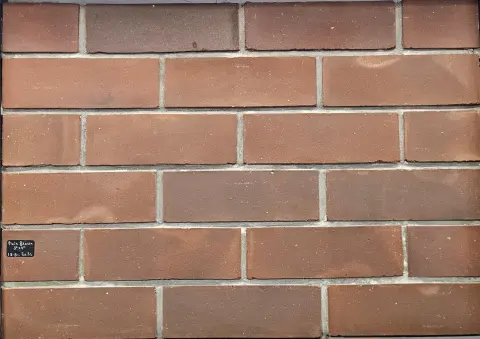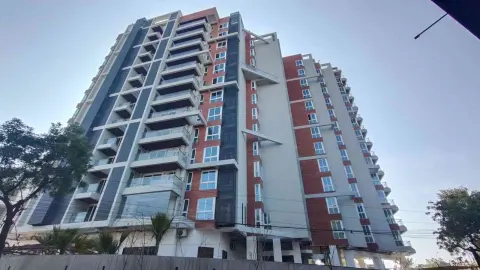
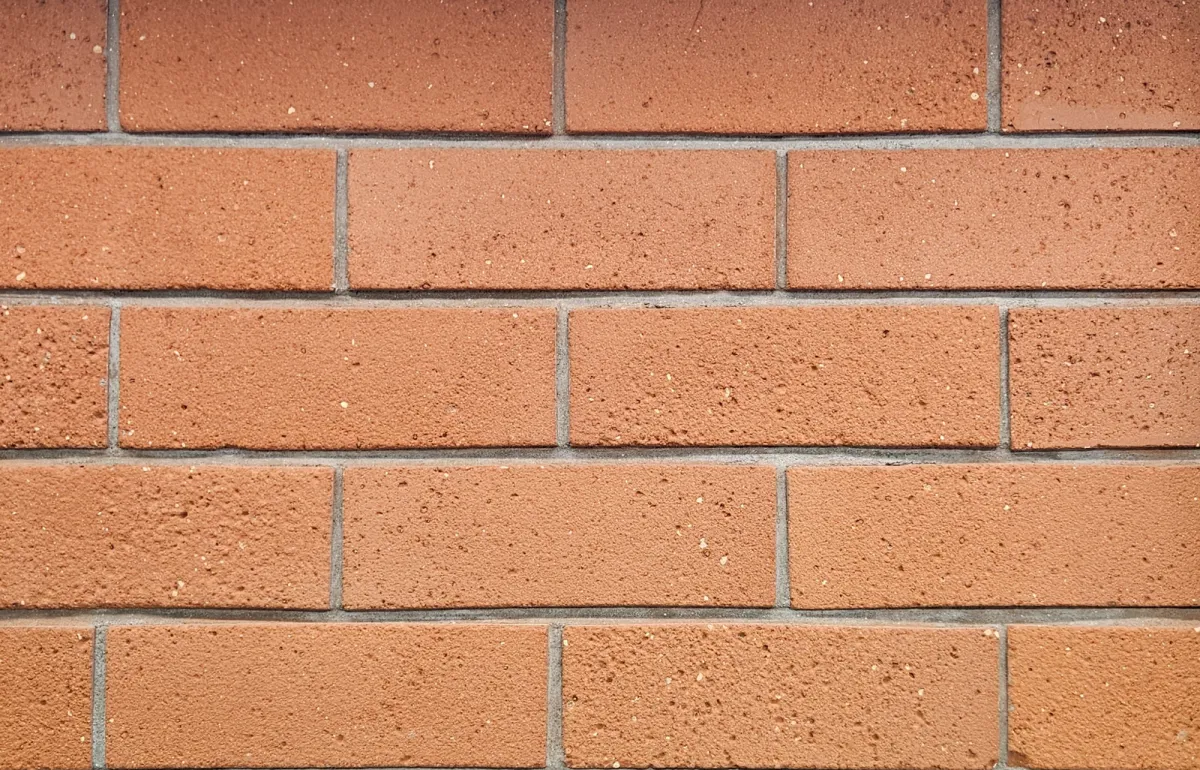
All three of our series start as the same Haryana clay. What changes is how the tile is formed and what happens to its face before firing, and that changes how the wall looks, how it cleans and how long it takes to fix.
Smooth brick tiles
Smooth tiles are machine-pressed, 20 mm thick, with a flat face and square edges. They lay quickly because every piece is the same, and the joints come out straight. Use them where you want a tidy, modern brick wall: house fronts, offices, cafes. They are also the easiest to wipe clean, which matters behind a counter or in a kitchen.
Textured brick tiles
Textured tiles are pressed too, but the face is sanded, roughened, aged, grooved or given a linen pattern. Side light picks up that surface, so a textured wall looks deeper. They hide dust and small marks better than smooth tiles, which suits boundary walls and busy entrances. Outdoors, give them a breathable sealer after grouting.
Handmade brick tiles
Handmade tiles are formed by hand in moulds, so edges and colour vary from piece to piece. Ours are thicker: 30 mm for the 9×3 and 25 mm for the 6×3. The extra depth gives deeper shadows at the joints. They take longer to fix, because the mason has to mix boxes and pick pieces as he goes, but the result is the closest to old brickwork.
A quick way to decide
- Clean, modern front or office wall: smooth.
- Exterior wall that faces a road, or a wall you want to look older: textured.
- Fireplace, farmhouse, heritage-style wall: handmade.
If you are between two, put both on a swatch board and send it to us, or order a sample box and hold them against the wall.